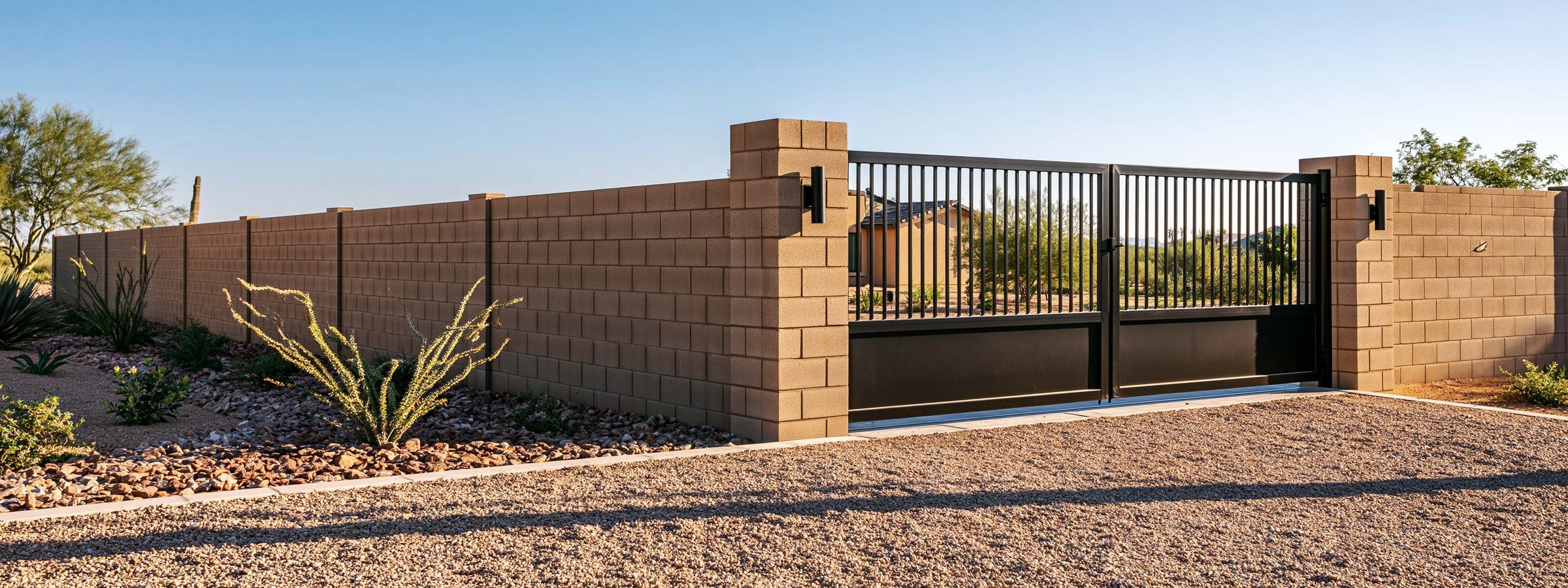
Everyone will quote you the gate. The gate is the cheap part. What you're paying for is a hole cut in a wall that was holding something up.
If you've got a quote in your hand for a fourteen-foot gate, hang onto it. It's probably a fair price for a gate. It just isn't a price for the job.
Nearly every yard in Queen Creek is closed in by one continuous block wall that went up with the subdivision, and most of them have no side access at all. So getting your rig in isn't hanging a gate. It's cutting a fourteen-foot hole in a structure, building two supports that can carry what that wall was carrying, and then hanging a gate on the result. Somebody local put it better than we could: *and then you have the cost of putting in the columns.*
Here's the part that costs us money to tell you. Go back to whoever wrote that quote and ask what they've allowed for the masonry. If they've got a good answer, you may not need us at all. If they haven't, you now know why our price is different. And you found out now instead of halfway through, with your wall open. Queen Creek Fence Company quotes both halves, which is what you want from anybody doing RV gate installation in this town.
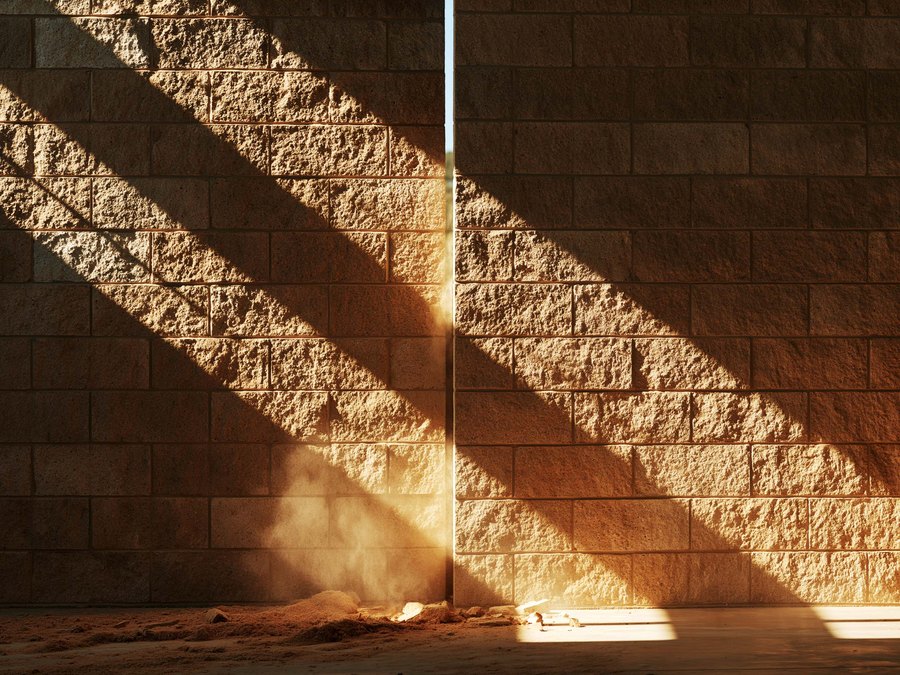
Your block wall isn't a tall fence. It's one structure, and every part of it holds up the part above and beside it. Take fourteen feet out of the middle and everything that was sitting on that fourteen feet has nothing underneath it any more.
On a low wall you can sometimes get away with that for a while, which is exactly why the shortcut is still around. Then it goes the same way every time. The block above the gap cracks along the joints, the block on either side starts to move as the load shifts into it, and now you're repairing a wall instead of using a gate.
The fix is a header, a beam across the opening, sized for what's standing on it, carrying that weight out to a support on each side. Where there isn't much wall above the gap, the cleaner answer is sometimes to take the wall down to the header line across that span. We work that out standing at your wall with a tape.
The two supports beside the opening are where your money goes, and they're doing two different jobs at once. They carry the wall's weight down to the ground. And they hold a gate that's seven feet wide and levering on them every time you swing it.
That second job is the one that gets missed. A column built to match the wall beside it is sized for the weight and not for the leverage. It needs its own footing, deeper and wider than the wall's, with steel tied into it. The most common call we get on these isn't a broken gate. It's a gate that won't meet in the middle any more, because the hinge-side column has tilted a degree or two. One degree at the column is several inches out at the far end of a seven-foot leaf.
This is the one decision you can't undo without doing the whole thing again, so take your time on it.
Most of what gets built here lands between twelve and sixteen feet, and fourteen is the most common single width. Twelve fits a trailer and asks you to be accurate every time you come in. Fourteen fits a class A and forgives an approach that isn't square. Sixteen is for a driveway that meets the street at an angle, or a yard where a tree or a return wall limits your swing.
Don't pick it off that list. Park what you own where it's actually going to live, stand out at the street and look at the angle you'll be turning at, then remember you'll be backing it in after dark. Two extra feet costs a little now. Two feet you didn't leave costs you the whole job again.
Almost always it's a pair of leaves. A single gate that wide is a punishing load on one column and needs an enormous arc of clear ground to open through. If you've no room to swing at all, a slider running along the inside of the wall solves it, and it changes what the columns have to do.
Which way it swings comes down to your ground. If it rises into the property, a gate swinging inward catches on the driveway before it's all the way open. The usual fix of hanging it higher leaves a gap underneath that your dog will find the same afternoon.
If there's any chance you'll want it opening by itself, say so now rather than later. Power out to it, room for the equipment beside the columns, and a leaf cycling several times a day all change what we build. Adding an opener afterward to columns that weren't built for one is a second job at a second price.
Everything expensive about an RV gate is either underground or above the gap. Your columns go down until they reach something worth standing on, and the header carries whatever's left of the wall above the opening.
The gate is the predictable part. The masonry is what makes two identical-looking openings on the same street come back at very different prices, and it's why we won't price it over the phone.
Your estimate splits the wall work, the columns, the gate and the permit onto separate lines, so you can see which part is actually costing you the money.
Before anything gets cut, we find out what's inside your wall. Solid grouted with steel running through it and hollow are two different jobs at two different prices, and you can't tell which you've got by looking at it. We walk your property line at the same time, because if that wall belongs to your neighbor at the point you want to open it, nobody can cut it. Not us, not anybody.
Queen Creek needs a permit for a fence or a wall, and there's no height that gets you out of it. The town does publish pre-approved standard details that a lot of this work builds to. We file the paperwork before anyone starts cutting, and the inspector has the final say.
Then it goes in this order, and the order is the job:
That last one gets skipped more than anything else on this list, and it's the cheapest thing in the job. Leaves that meet perfectly the afternoon we leave and sit half an inch out two weeks later haven't failed. They just weren't finished.
A gate wide enough to get a motorhome, a boat or a trailer off the street and onto the side or back of your property. Around here it nearly always means a cut-in: an opening made in a block wall that never had one, supported on both sides, with a gate hung in it. Most subdivisions here went up with a continuous perimeter wall and no side access at all.
Most cut-ins land between $3,500 and $7,500, and it helps to see that as two prices rather than one. The gate itself, twelve to sixteen feet, double leaf, hung and working, runs roughly $1,800 to $4,000. The masonry adds roughly $1,500 to $4,000 on top: cutting the opening square, two column footings, the header carrying the wall above, and patching back. Automation is a separate decision and close to doubles the job, which is why we ask about it early. Your estimate splits all four.
Twelve to sixteen feet, with fourteen the single most common. That's what gets built here rather than a published standard. Your width is set by the angle your driveway meets the street and how much room you have to swing, far more than by the length of what you're parking.
There isn't a standard in the sense of a rule you have to build to. There's the common twelve to sixteen foot range, and then the practical limits. How far your wall can be opened, your approach angle, and how much clear ground the leaves need to swing through. Twelve feet works and forgives nothing. Fourteen is the width most people tell us afterward they're glad they went with.
In a fence, a light single gate in a gap that already exists, because there's no structure to change. In a block wall there's no cheap version, and that's the honest answer rather than the sales one. The opening still has to be cut square, the load above it carried, and the columns founded deep enough for a wide leaf. Where you can genuinely save is on the gate itself, on ornament, and on doing the electrical prep once instead of twice. Saving it on the masonry is borrowing from yourself at a bad rate.
Same answer, with a local footnote. Queen Creek and the towns around it are full of block perimeter walls that went up with the subdivisions, so almost every RV gate here is a cut-in. Pricing you find online for a gate hung into an existing gap isn't describing your job. Add that walls and fences need a permit here, which is a line on your estimate rather than a surprise. The visit that produces that estimate is free.
The wall the gate goes into, built or extended to the right spec.
Block wall construction →The motorized half, on driveways long enough to want one.
Automatic gate repair →Wide lots and acre parcels, where these are asked for constantly.
Apache Junction →Long driveways under the Superstitions, and county rules rather than town ones.
Gold Canyon →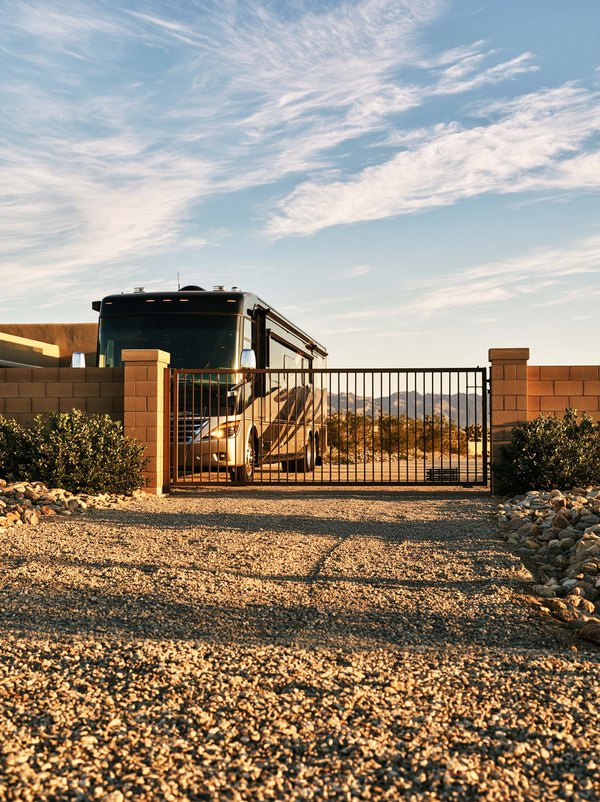
Free, no obligation
One picture of the wall where you want the opening, and one from the street showing how your driveway comes in. That tells us most of what we need before we get there.
