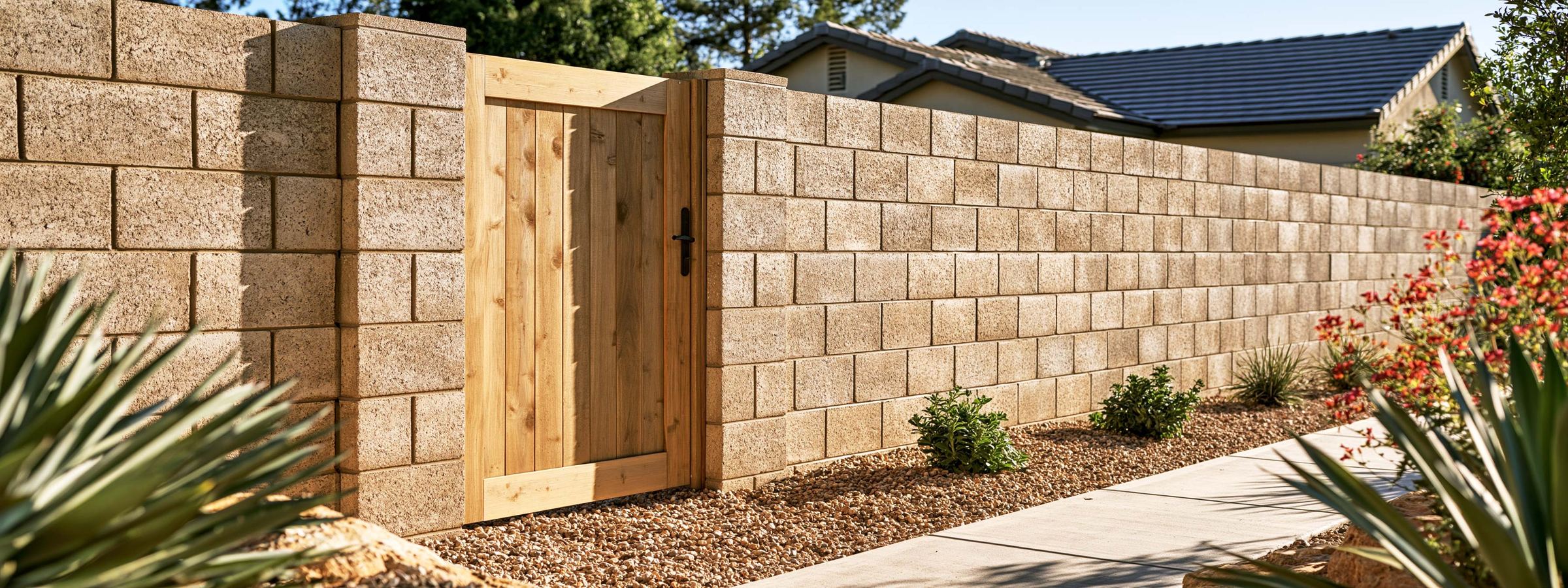
A sagging gate is usually the post, not the gate. Most of these are a morning's work, and we'll tell you which one you have.
Almost every gate here comes down to three parts: the gate frame, the post it hangs from, and the hardware in between. They fail for different reasons and from twenty feet away they give you exactly the same picture. A gate whose far corner has dropped an inch looks identical whether the frame has gone out of square or the post has tipped toward your driveway.
That matters to you because the three cost wildly different amounts. Hardware is an afternoon. The gate frame is a day. The post is the one with concrete in it.
So do this before you call anybody, us included. Lift the far corner of the gate until it swings clean, and watch the post. If the gate comes back square and the post stays put, the gate is what needs work. If the post travels with it, nothing done to the gate will hold.
Thirty seconds, no tools, and it decides most of what follows. Queen Creek Fence Company works out which of the three it is first, because gate repair on a hinge and gate repair on a post are not the same job.
Your gate is the only part of the fence with moving parts. Everything the weather does to the fence beside it happens to the gate too, and then you add weight, motion, and somebody pushing it open with a knee.
Wood. It dries out here in a way it doesn't in a wet climate. Your gate was built from boards that arrived damp and gave that moisture up over the first couple of summers. Every joint loosened a fraction. No single one failed, they just stopped being tight. Once the corners aren't square, the far bottom corner drops. That's the sag.
Then the fasteners. Your hinge screw holds into wood that's been shrinking and swelling for years, so the hole widens a little every season until the screw turns without gripping anything. Almost every wood gate we look at has at least one doing nothing.
Posts. This is the expensive half. Yours carries the whole weight of the gate on one side, all the time, and gets levered outward every time it swings. It's the hardest-working post on your property, and almost nobody builds it any differently from the ones on either side of it.
On wood we find post rot, always under the dirt where you can't see it, and the cause is hardly ever rain. It's a sprinkler head aimed at the base, or a low spot that stays damp after the yard gets watered. A post can be sound at head height and gone three inches down, which is why we push on your post before we say anything about your gate.
On steel and iron it's the concrete instead. A post set in a hole that stopped at caliche works itself loose over a decade of a gate swinging on it. The tell is a post that rocks slightly when you push the top, and a thin gap opening in the dirt at its base.
Four checks, in this order, and not one needs a tool:
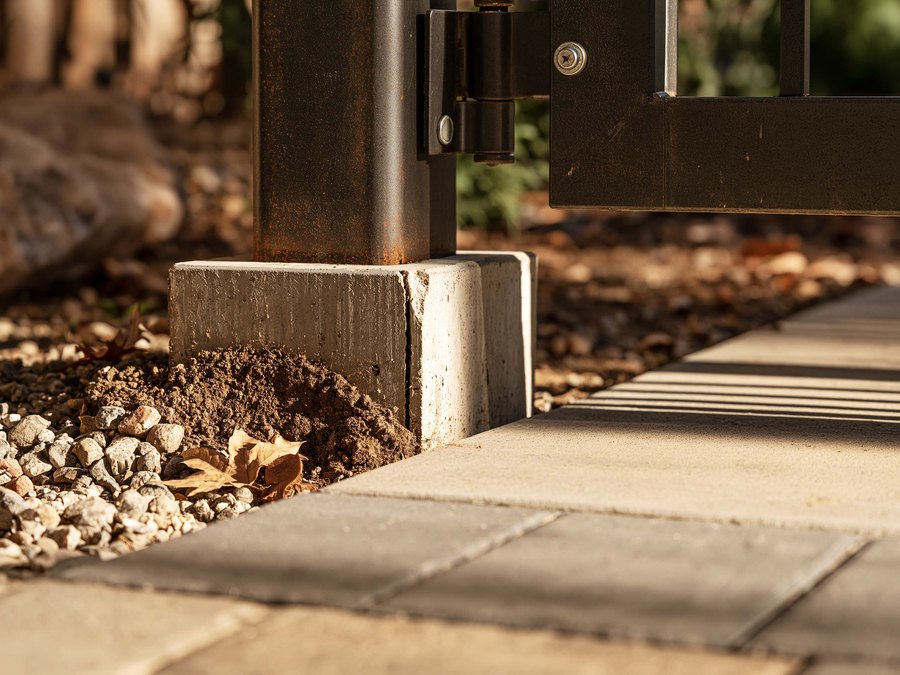
Hardware is what we're hoping for on the drive over, and it happens more than people expect. A post is the one that costs, because a post means concrete and a hole.
Which is also why a photograph can't price your gate. It shows the gate, and the gate is the part we're least worried about. A gate hung on a post that's moved will be back where it started, whatever we hang on it.
Your post decides this estimate before anything else does. A gate that keeps its post takes an afternoon of hardware. A gate that needs a new one takes a day with concrete in it.
That's the one thing no photograph settles, so we take the weight off your gate on the first visit and watch what moves.
A gate frame that's gone out of square. It comes off and goes flat on the ground, because nobody can square a gate that's hanging. We pull the corners back to true and hold them there, then refasten the loose joints into fresh material rather than back into the old holes. Last, a diagonal brace from the bottom of the hinge side up to the top of the latch side. That direction matters. A brace put in the other way does almost nothing.
On iron we do the same job with heat. The frame gets pulled square and rewelded at the corner that opened, then coated and painted so it doesn't read as a repair from the street. Iron is nearly always worth saving.
A post that's moved. The old post comes out with its concrete on it. We don't cut it off at ground level and leave the rest, because a lump of old concrete in the hole is exactly what stops the new post being set properly. The new hole goes deeper and wider than the fence beside it would need, since this post is carrying a gate.
Then we hang your gate, and then we hang it again. Concrete keeps gaining strength for days and a gate hung the same morning moves a little while that happens. So the latch gets set last, once the gate has swung enough times to find where it wants to sit. That second visit costs you almost nothing and plenty of crews skip it.
Four, usually in this order. Your latch stops lining up, which is normally a symptom rather than the fault. The gate starts dragging on the concrete, which means the far corner has dropped. A hinge screw lets go, which you find by turning it and feeling nothing bite. And the post moves, which is the expensive one and the one people notice last. On wood gates add post rot below the dirt; on iron, a corner joint that's opened.
Nearly always, and usually for less than you'd expect. Iron doesn't tire the way wood does. What fails is a joint at a corner, and we cut that back to sound metal and reweld it. The other common one is corrosion right at the bottom, where the coating is thinnest and water from the yard collects. We take that back to clean metal, treat it and paint it. An iron gate that looks past saving from ten feet away is usually a day of work.
Budget $150 to $450 for the hardware case, which covers the visit, the parts and setting the latch where it belongs. That's the commonest answer here by a wide margin. If your post has to come out and go back in concrete, expect $400 to $900 instead, because that's a hole in the ground and a day rather than a morning. The lift test above tells you which of the two you're in before anybody quotes you.
A wood gate here does well to give you a decade without attention, and that's the sun rather than a defect. Iron will outlast the person who bought it, as long as the bottom stays out of standing water. Chain link sits in between and usually gives up at the hardware. The more useful question is how long your post lasts, because the post decides the gate. One set in enough concrete with no irrigation landing on it holds a gate for as long as the fence stands.
Usually, and more often than you'd expect. It comes down to how much sound wood is left in the frame. If the timbers are solid and it's the joints that have loosened, the gate comes off, goes flat and gets pulled back to square. Then it's refastened into fresh material. You end up with a better gate than you had, because it'll have a proper brace in it. If the frame has gone soft from sitting against wet dirt, a new gate on the post you already have is cheaper.
The first visit is free and nothing is attached to it. The difference between hardware, a gate frame and a post isn't something a photograph settles, so we'd rather find out standing on your driveway than write you a price that changes later. You'll be told which of the three you have, what we'd do about it, and what that costs. Take it away, think about it, or put another price beside it.
The gates that work on power, and the parts of them that quit.
Automatic gate repair →
Free, no obligation
One picture of the gate closed and one of the bottom of the post where it goes into the dirt tells us most of what we need before we arrive.
