
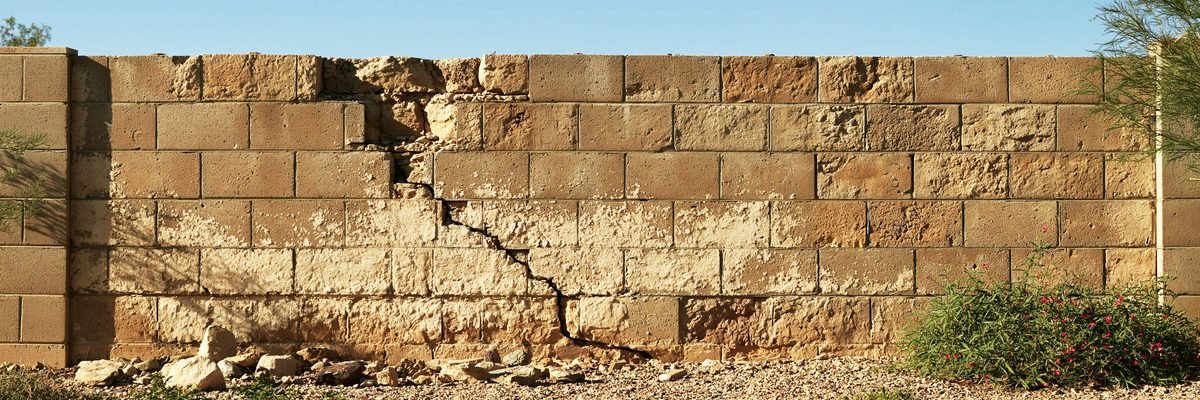
Block Wall Repair
A leaning wall moved because its footing moved, so we dig at the base and fix that before we rebuild. On most walls you're paying for the section that failed and keeping the rest.
Block wall repair →
Block Walls, Fences and Gates. We Handle the Permit.
Block walls, fences and gates across Queen Creek and the towns around it. You'll get an itemized price and we'll handle the permit.
You came here with something specific. A wall leaning after the monsoon, a gate you have to lift to latch, a pool going in with an inspection date attached, or a property line with nothing along it.
Before you take a quote on any of it, here's the thing about Queen Creek that almost never makes it onto one. It is the first thing a fence company in Queen Creek, AZ should tell you, and it almost never reaches the quote.
Height isn't the only rule. The zoning ordinance sorts fences by how much you can see through them, and the Design Standards then say which kind belongs where on your lot. There are three:
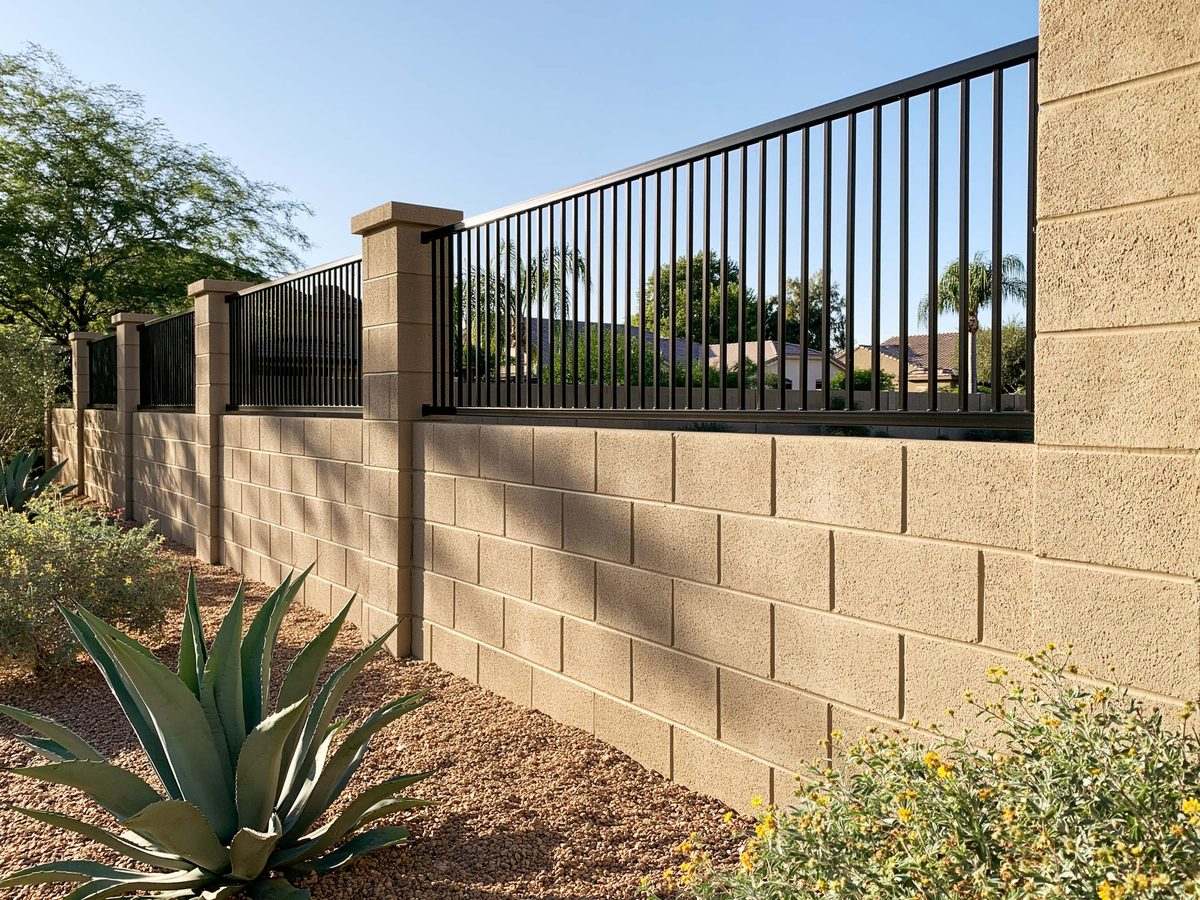
Where the fence sits decides which one you get. See-through along property lines in rural and estate neighborhoods. Partial view where a yard backs onto a park or shared open space. A fence facing a public street matches the materials and main color of your subdivision's standard plan, or its theme wall. The full standards are in Section 5.2, Fencing and Walls.
Which means your back fence and your street fence can be two different kinds on the same property. That's the normal answer out here and it catches people every time. We put both on one site plan and quote them as one job.
Take that with you even if you never call us. A quote written without it is a quote for a fence you might not be allowed to build.
Queen Creek Fence Company bids to the right kind from the first drawing, so the drawing you approve is the one that gets stamped. We build from Queen Creek's own pre-approved plans for four-inch interlocking block and for six- and eight-inch masonry walls, which puts a wall on your quote the permit counter has already seen. We work Queen Creek and the towns around it, from San Tan Valley out to Coolidge.
You need a permit for a fence or a wall here, and there's no height you can stay under to skip it. Three things go in with the application:
We file the package complete, which is the difference between one trip to the counter and two. The town's own standard detail covers the footing, so you never pay an engineer to draw a wall the town has already drawn. Rules change and the inspector has the final say.
What we do
Eleven things we build, repair and replace, with the ones people call about most at the top. Two questions start every one of them: what your lot allows you to build, and what the ground under it is doing.
A leaning wall moved because its footing moved, so we dig at the base and fix that before we rebuild. On most walls you're paying for the section that failed and keeping the rest.
Block wall repair →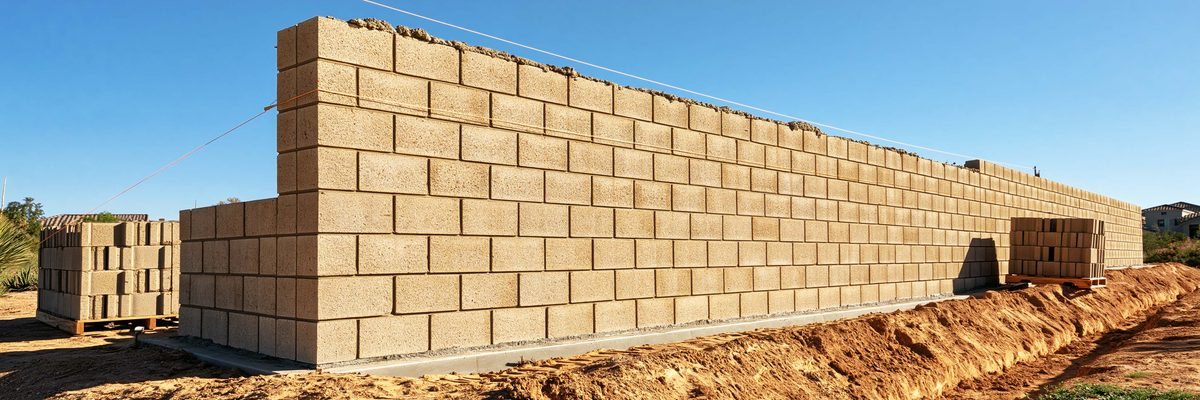
We build your new wall from Queen Creek's own approved plans, in four-inch interlocking, six-inch or eight-inch block. Block color and cap detail get picked against what's already standing on your property.
Block wall construction →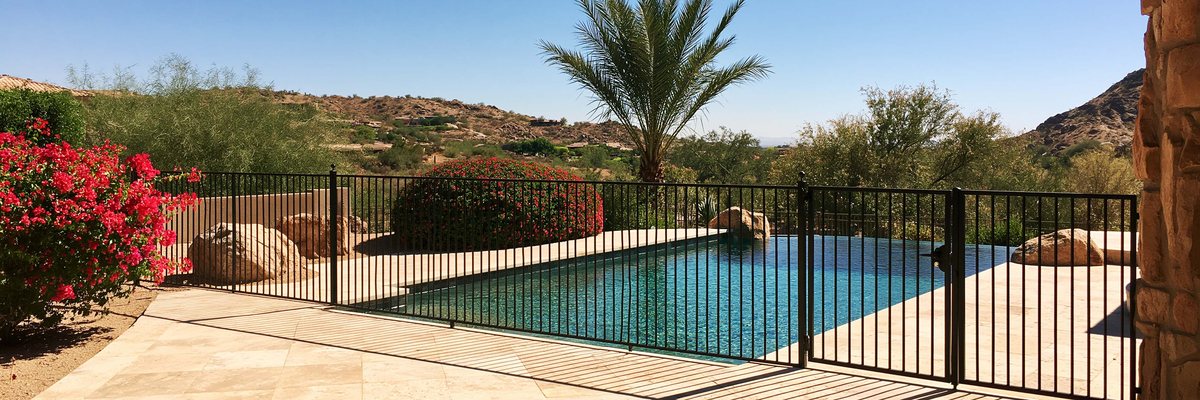
Every pool here needs a barrier, above-ground included, and Queen Creek gives you two ways to satisfy it. We build to both, and we'll tell you which one your yard already sits closest to.
Pool fencing →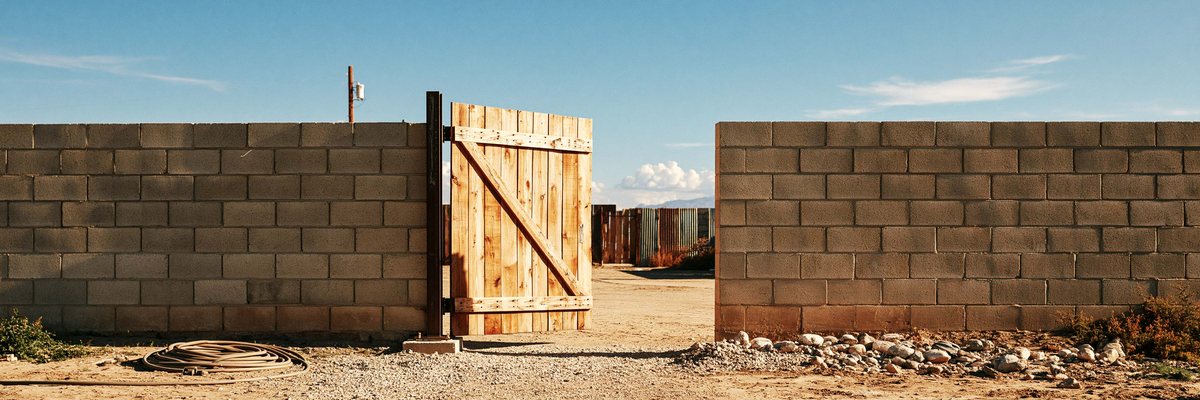
Sagging, dragging, a latch you have to lift. Each has its own cause, and we start at your post on all of them. Get the post right and you keep the gate you already have.
Gate repair →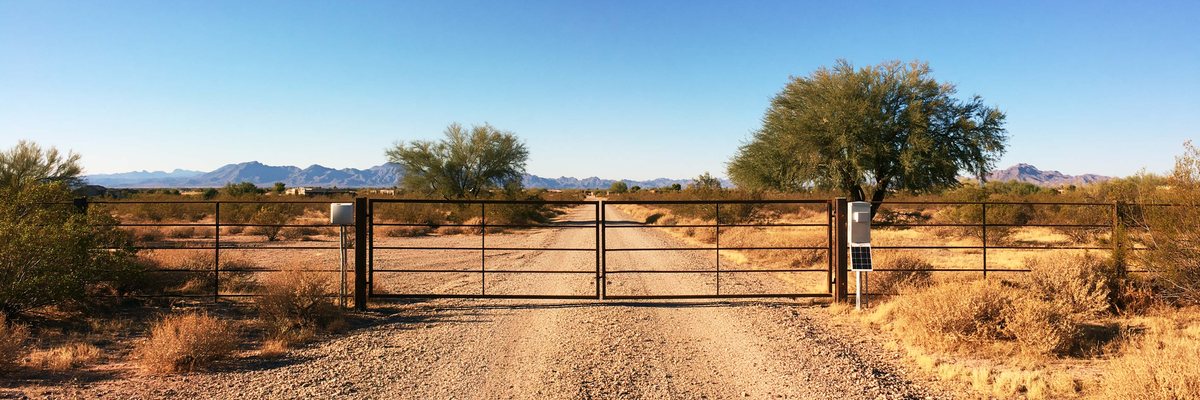
On long driveways the opener usually gives out before the gate does. We fix the opener and the gate it hangs on, so one call covers both and you're not chasing two trades.
Automatic gate repair →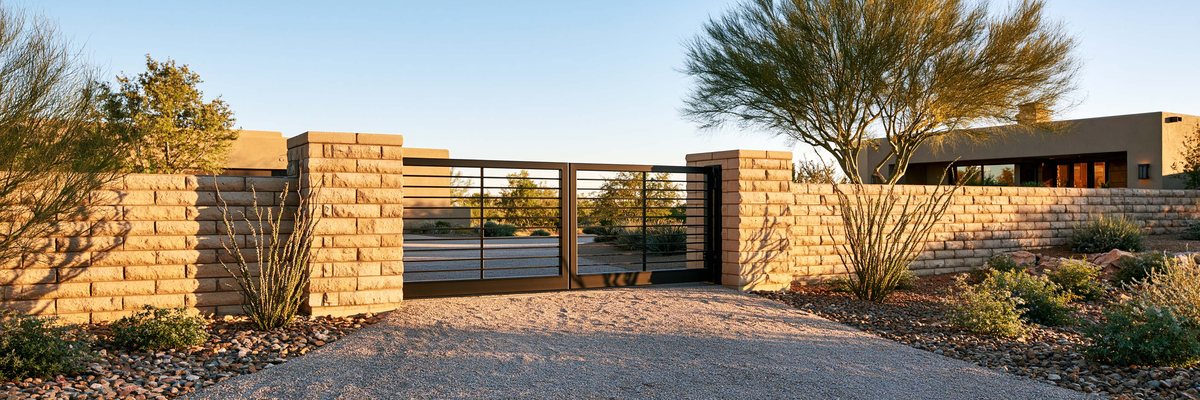
A wide opening cut into your block wall with a gate framed into it. We carry the weight of the wall above it and set the posts deep enough that a fourteen-foot gate still lines up in ten years.
RV gates →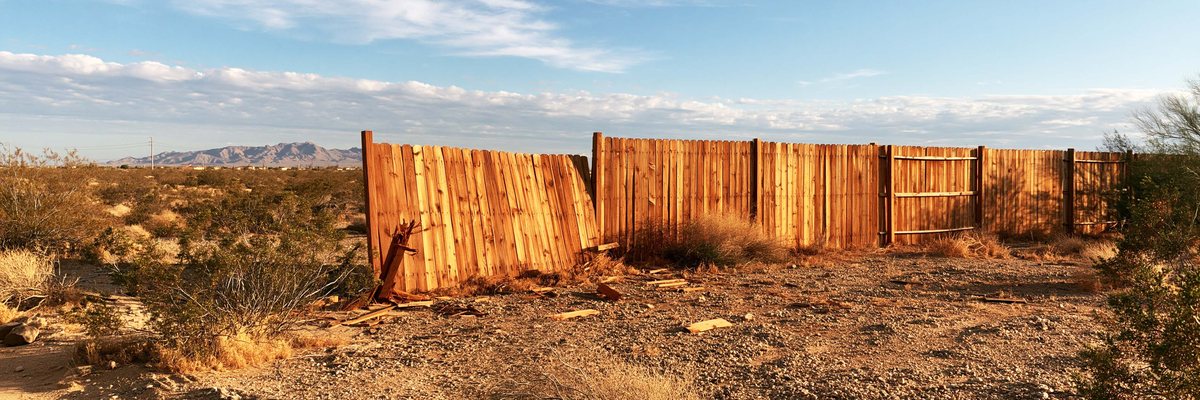
Wind finds the weak post. A fence that came down in a monsoon had a post already gone where it met the dirt, so we start below the surface. Usually one section is all your fence needs.
Fence repair →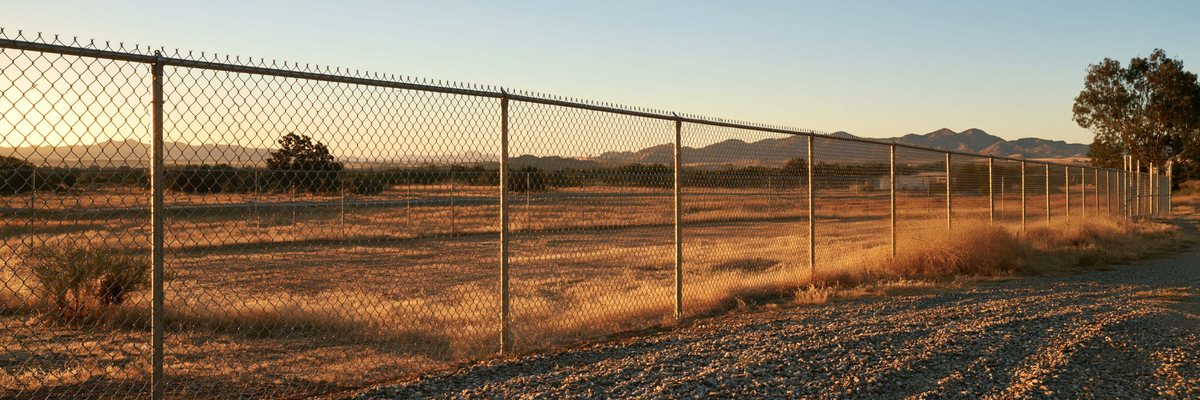
Chain link is the most repairable fence there is, and the one written off earliest. Leaning posts, sagging mesh, a gate that misses its latch: we fix all of it in place, and you keep the fence you already paid for.
Chain link fence repair →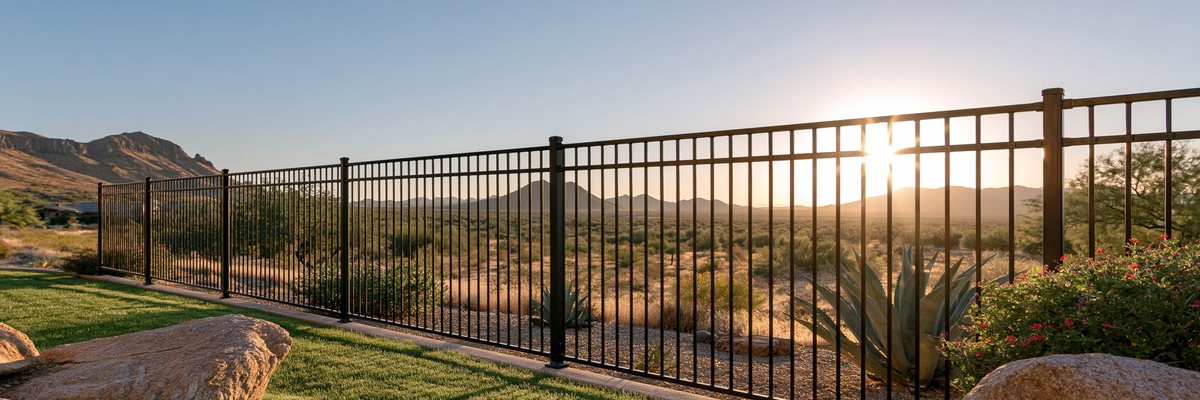
Iron rusts from the bottom up, because the coating is thinnest where the pickets meet their concrete and that's where your sprinklers land. We grind the band back to clean metal, treat it and repaint that stretch.
Wrought iron and view fence →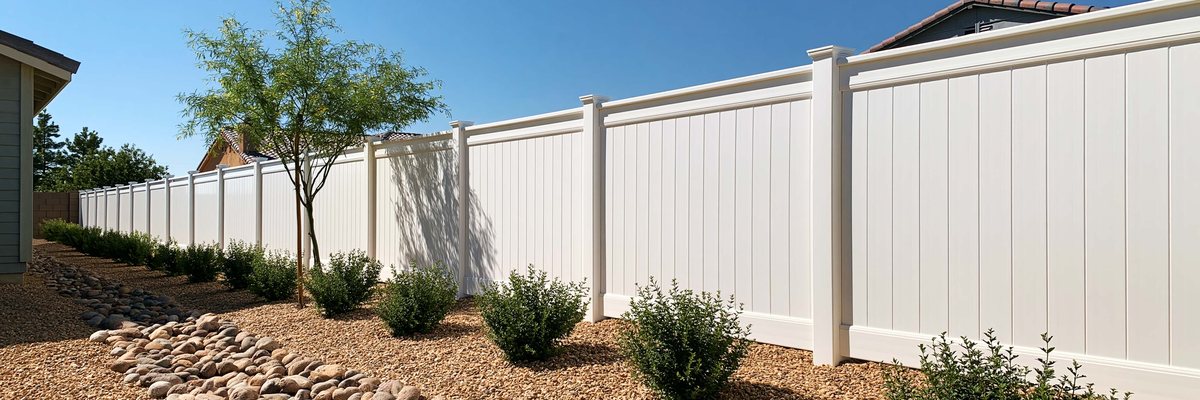
In this sun the grade is the whole story, and two fences that look identical in your yard can be built very differently. We write the grade on your bid.
Vinyl fence →Wood earns its place on privacy, side yards and gates where you want the look. Here it wears out from sun and heat, so the boards bleach and split while the post goes at the dirt line. Post depth, a gravel base and concrete crowned above the ground decide how long your wood fence lasts.
Wood fence options →Length, height, style, gates, hardware and permit, each on its own line of your estimate.
Solid, see-through or half and half, matched to what your lot calls for.
We fill out the application, draw the site plan and stand at the counter.
Queen Creek publishes its own wall drawings and we build yours from them.
Block, color and caps chosen against the wall you already have.
We read the ground and where the water goes before we dig.
Every crew we send to your Queen Creek job carries both.
Two houses on the same street can take two different footings, so we dig at the base and read the dirt before we price your wall. Stair-step cracking through the mortar joints is the signature of soil movement. White salt blooming on the face marks a moisture path through your block.
Caliche turns your post hole into a bucket. It's soil cemented together by calcium carbonate and it doesn't let water through, so whatever goes in stays there after every storm and every watering cycle. That's what rots a wood post at the collar, rusts a steel post at the waterline and works a footing loose over a few seasons. Technique answers all of it, and we dig to the same three rules on every hole:
Almost no town publishes its own fissure information and Queen Creek does. They're long narrow cracks that open where groundwater pumping has let the land settle, and the town describes them running more than a mile long and eroding quickly. One 1.5-mile fissure near Queen Creek reopened in August 2005 after heavy rain. The Arizona Geological Survey maps the Chandler Heights and Apache Junction areas. We pull the map for your address before we set a post, and most of the time it has nothing to say about your lot. We'll tell you so in one sentence.
If your fence came down in a storm, a microburst usually did it. One July 2024 Phoenix storm recorded 59 mph with radar estimates of 70 to 80, and more than twenty microbursts inside ninety minutes. That puts the whole load on at once. What comes down afterward is almost never a sound fence. The section lying in your yard is the evidence, not the cause. We dig at the post first.
Powder coating goes on thinnest where the picket meets its concrete, which is exactly where your sprinkler spray lands, so iron rusts from the bottom upward. Wood and cheap vinyl give up to sun and heat instead, bleaching and checking from the top down.
And here's the cheapest fix on this whole page. Move the sprinkler head, or turn the arc off the fence line, and the bottom of your iron stops taking a shower twice a day.
| Material | Holds up to | Where it fits here |
|---|---|---|
| CMU block | Sun, wind and decades, on the footing under it | Perimeter walls, privacy, RV gate openings |
| Wrought iron | All of it except the bottom few inches | View fence, courtyard and driveway gates |
| Chain link | Impact, and it repairs in sections | Side yards, dog runs, equipment enclosures |
| Vinyl | Sun, when the grade is right | Back yards, pool fencing, low-maintenance privacy |
| Wood | Privacy and looks, on post depth | Side gates, privacy fencing, shaded yards |
| Pipe rail | Livestock and impact, on acre lots | Corrals, rural frontage, horse property |
There's no square-foot price for a fence, and a quote that opens with one has skipped every part that changes it. Seven things set yours, and you can place your own project against them before anybody comes out.
All seven go on your estimate separately, so you can see what's carrying the cost. Two of them you can actually move: access and grade of material. Height and how open your fence has to be were settled by your lot before you called anyone. Knowing which is which is most of why two quotes for the same fence land so far apart.
Property lines, slope, access, and which kind your lot calls for where.
Length, height, style, hardware and permit, each shown separately.
Site plan, materials drawing and Queen Creek's standard detail, filed together.
Your start date goes in the written agreement, and we put the yard back as we found it.
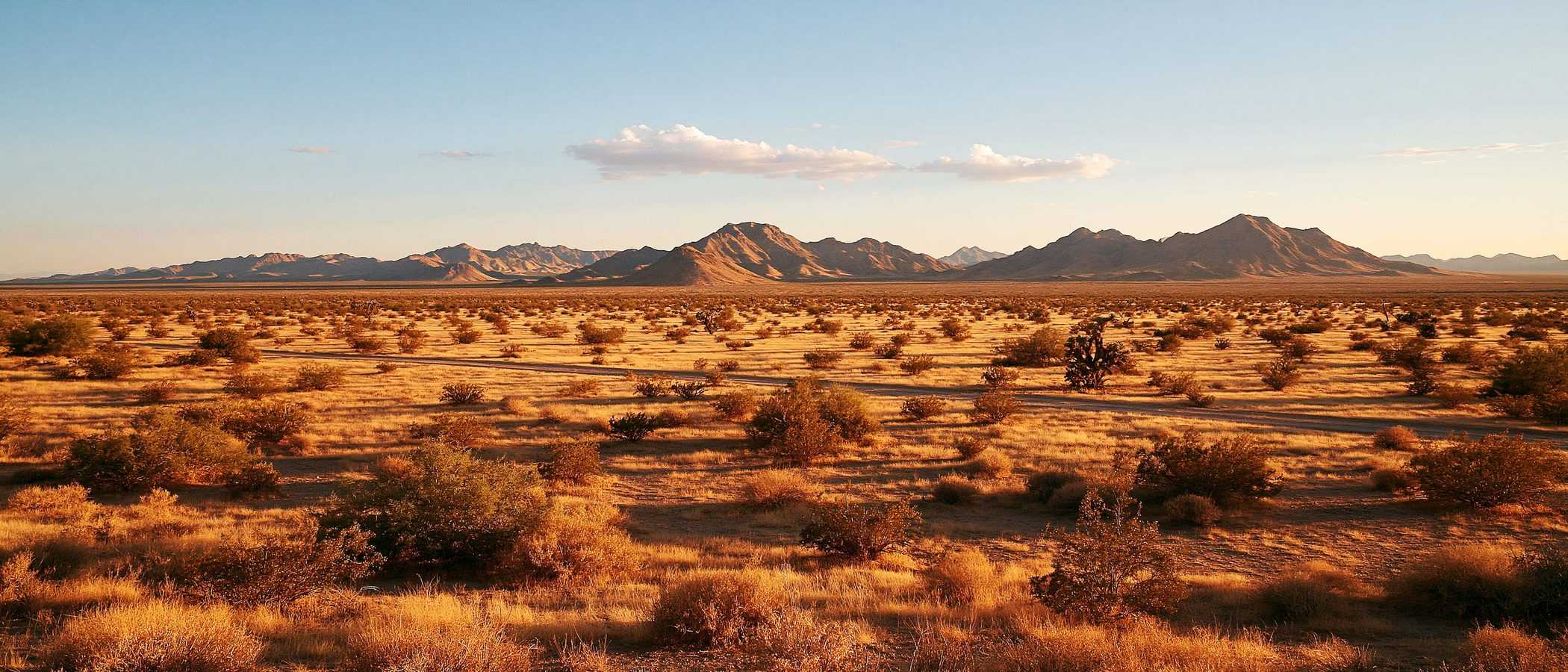
The rules change as you cross a town line, and we build to whichever one governs your lot.
Manufactured-home lots and horse ground, fenced differently.
Apache Junction fencing →Yes, and no height gets you out of it. Your package runs to four things. A construction permit application. A site plan showing your property lines and where the fence goes. A drawing of the design and materials. And either one of Queen Creek's approved standard details or engineered drawings. Media walls over seven feet take a separate building permit, so tell us early if yours goes taller. We assemble the package and file it, so the permit never becomes your errand. Rules change and the inspector decides.
In Queen Creek, yes, and it surprises people every time. Every pool here needs a barrier, above-ground included, and the town gives you two ways to satisfy it. One is a five-foot fence on three sides plus a motorized safety cover, a self-closing and self-latching door at ground level, or a four-foot barrier between the pool and the house. The other is five-foot fences on all sides. We'll tell you which one your yard already sits closest to. This is general information rather than a code determination, and the inspector has the final say.
Your ground and your property line decide more than the material does. Block handles sun and wind for decades, and the footing under it decides its life. Wrought iron and view fence keep the view, and they rust at the bottom where the coating is thinnest. Vinyl comes down to the grade you buy. Wood gives you the warmest look, and it lives or dies on post depth. Tell us which failure you'd rather avoid and we'll point you at one.
Repaired, most of the time, and the fix starts under the dirt. A lean means the footing moved, so we fix what moved and then rebuild the block to match the wall you already have. Isolated cracking on a sound footing is a repair. Footing failure across several sections, or rebar rusting through inside the block, is where rebuilding that stretch becomes the better value for you. Either way you keep the wall that's still doing its job.
Free estimate
Send the form and we'll get back to you, or call (480) 933-2762 and ask. Tell us how many feet, how tall, and which side of your property it goes along. We come out, we measure, and you get the price itemized.