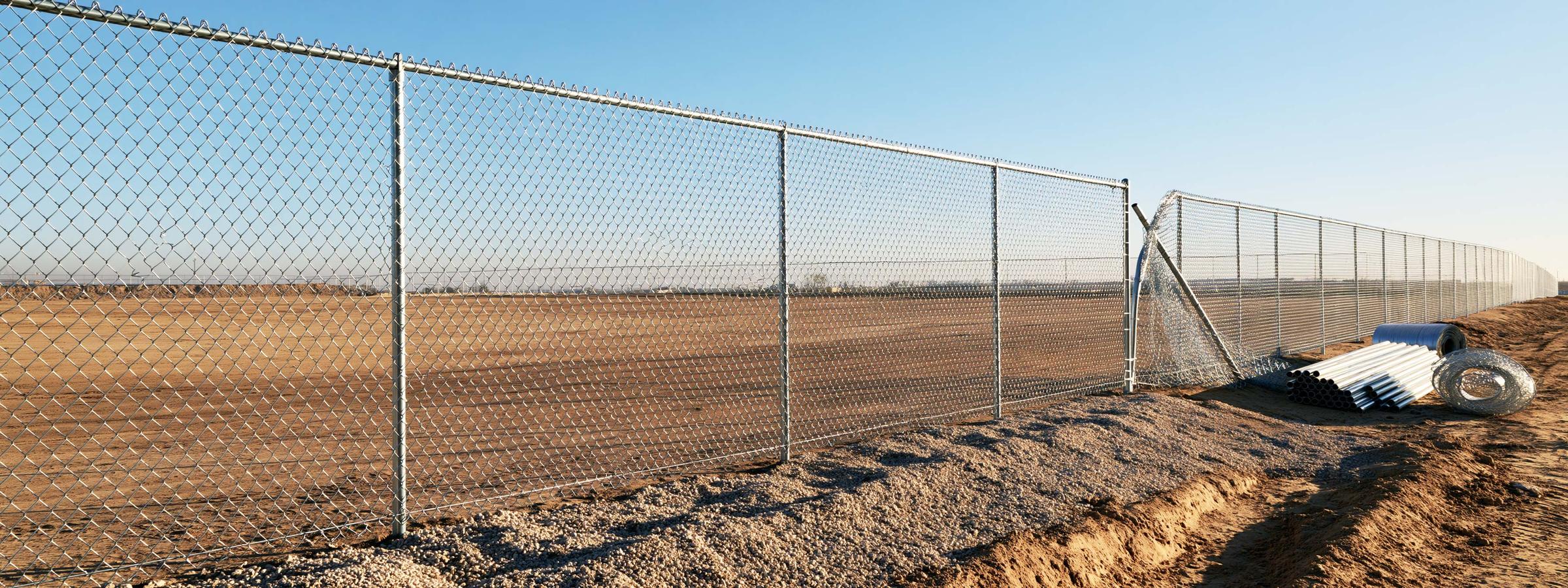
If your line is open, we close the gap first and sort the fence out second. Most chain link repairs are cheaper than people expect.
Most calls about chain link have nothing to do with how the fence looks. Something went through it, and now your line has a hole in it.
That's a security problem before it's a fencing problem, so we treat it as two jobs and quote it as two. We close the gap. Then we put your fence back properly.
And plenty of people only ever want the first half. That's a perfectly sensible place to stop, we'll tell you so, and you'll see the two priced separately on the estimate so you can take one and leave the other. Queen Creek Fence Company treats chain link fence repair as those two jobs in that order, and homes, yards, storage compounds and construction fence all get the same answer.
Some of these calls are genuinely urgent and some aren't. If your line is open, it's open to whatever is on the other side of it. A line that stands intact but tired can wait for a Tuesday.
Three parts doing three different jobs. Your chain link looks like one thing and works as three. The mesh, which the trade calls fabric, does the actual stopping. The posts and the top rail are the frame that holds it up and keeps your line straight. And at every end, corner and gate there's a tension bar, a flat strip woven down through the last row of mesh and bolted to the post.
Hardly anybody has heard of that third part and it decides most of what you pay. Your mesh doesn't hold itself up. It's stretched between those bars like a string on an instrument, so when a post goes over you don't get a torn fence. You get a slack one for thirty feet in both directions.
The breach, and the slow version of it. A breach announces itself: mesh cut, mesh pulled off its ties, a post flattened, a gate pushed in. You'll know when that happened. The slow kind arrives without a date. Your galvanized coating wears thin where the sprinklers reach it. Ties give up one at a time, and the bottom edge lifts a little further every year until there's a foot of daylight under it. Both end in the same place.
When we come out to a fence that's open, the work goes in this order:
How bad it looks from your house doesn't decide this, and neither does the age of your fence. It comes down to whether the frame is still doing its job.
When a patch is the whole answer. Where the mesh is cut in one place and the posts on both sides still stand solid, your repair stays small. We weave a piece of new mesh into the old with a single strand, a proper mechanical join rather than a row of clips, and at ten feet it disappears.
Same for a stretch that's gone slack. Nothing is broken. The mesh has crept over the years and the ties have quit, so a day of retensioning and retying gives you back a fence that reads as new from the street.
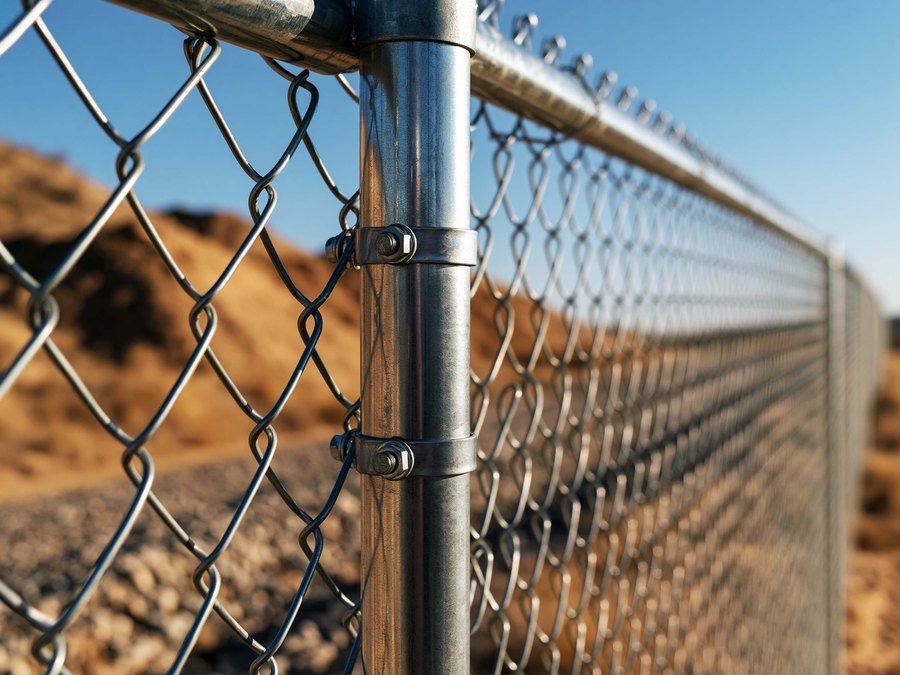
When the frame is the job. Posts are the one that costs you. If yours has been hit, or its concrete has broken up underground, it can't honestly be straightened in place. It comes out with the concrete on it and the new one goes in deeper, because shallow setting is usually what moved it.
Your top rail sits between the two. A gentle bow often gets sleeved and pulled back into line, while a sharp kink is cut out and a new length slotted in. Cheap material, awkward labor, which surprises most people.
The honest ceiling on all of this is matching, and you should hear about it early. Galvanized mesh that's weathered fifteen summers has dulled to a soft gray while new mesh is bright. We'll tell you where a repair is going to show.
We split this estimate in two: what closes your property today, and what makes your line right afterward. Those are genuinely different decisions, and plenty of people want only the first.
The rest of it turns on what actually gave way. A hole in the mesh with sound posts on both sides, and the same hole with a post pushed over behind it, look identical from the street. They land nowhere near the same price.
We walk your whole line rather than only the damaged part, because two weak posts dealt with on one visit cost far less than the same two on two visits. We look at what's on the other side of your fence, since that decides how urgent the temporary work is. And we look at your gates, which carry most of the hardware and take most of the wear.
Where your property has to be closed before the proper repair can happen, that gets quoted as its own line so nobody pays twice.
Then we set the posts and leave them to gain strength, because mesh stretched against fresh concrete pulls a post out of line and nobody notices until the fence is finished. The fabric gets stretched with a puller rather than by hand. Hand tight isn't tight, and it shows up as a belly a few months later. The tension bar goes down through the end of the mesh and gets bolted to the post. We sleeve your top rail back into line and the ties go on at proper spacing. Then the bottom edge, because a fence tight at the top and loose along the ground is a hole that hasn't happened yet.
And we'll tell you what we didn't do. If two posts further along are on their way out and you only asked about the one that gave way, they go on your estimate as a note rather than a charge.
We treat an open line as urgent, and that word means something here. An open line is a hole somebody can walk through, which is nothing like a fence that's just got tired. We get out as fast as the day allows, and what's already booked decides that. Closing a gap is a much smaller job than repairing it properly, and the first often happens well before the second. Tell us what's on the other side of your fence and that decides where you sit in the day.
Most chain link repairs land between $200 and $700. What moves you up that band is a post that has to come out with its concrete. The mesh and the fittings cost very little, and nearly all the labor is in the ground. For comparison, new chain link runs $8 to $16 a foot installed here, so a repair is almost always the cheaper answer by a wide margin. Closing an open line is quoted separately from the finished repair, so you can take one and leave the other.
Often, and it turns on what's on the other side of your fence and what's already booked. As soon as we can is the promise. Worth knowing in advance: we can close your site without doing the full repair, and the two don't have to happen on one visit. A gap can be closed with the existing mesh pulled back and tied off, with new mesh on driven posts, or with temporary fence stood in it. The proper repair follows once the ground work is ready.
Usually close, rarely perfect, and you're better off knowing which before the work than after. Three things have to line up: the size of the diamond, the thickness of the wire and the coating. Diamond and wire rarely cause trouble, since chain link sizes barely change. Color is where it shows, because fifteen summers take galvanized mesh from bright to a soft gray and nothing brings it back. Where the match matters to you, we'd usually renew a whole stretch between two posts rather than patch the middle of one.
Yes, and gladly. A storage yard, temporary fence around a job, a school field or the back line of a house all get the same visit and the same answer: your line gets closed first. What changes is the pressure. On a job site an open fence is somebody's insurance problem as well as their security problem. Tell us which you are when you call, since it changes what we put on the truck rather than what we charge.
How sharp the bend is decides it. A gentle bow over a long length can usually be pulled back and sleeved, which means a short piece of slightly wider pipe slid over the join to stiffen it. Once your mesh is tight against it again the line reads straight. A sharp kink is different, because the pipe has stretched on the outside of the bend and won't take an even pull again. We cut that length out and slot a new one in. The material costs almost nothing; what costs is that the mesh has to come off the top and go back on.
Wood, vinyl and iron on the same property, when the mesh is not what gave way.
Fence repair →Black metal on the front and back lines, going at the bottom first.
Wrought iron and view fence →Work yards, cotton ground and town lots, none of them fenced the same way.
Coolidge →A new subdivision and a hundred-year-old street about ten minutes apart.
Florence →
Free, no obligation
Where your fence is, how wide the gap is and what it's keeping in or out are the three things that decide what we bring.
